

Hello, my name is Henrik Maltzman. I’m a gastroenterologist and PhD student in the Endeavor project working at Karolinska University Hospital in Stockholm, Sweden. As mentioned in my previous blog post, my thesis is not primarily on the ENDEAVOR material. Instead, I’m researching various topics in early gastroesophageal cancer from an endoscopic standpoint. Today I thought I would write something on the other major type of esophageal cancer – squamous cell carcinoma. Before doing so I will give you some background.
Barret’s Esophagus and ‘Adenocarcinoma’
In Endeavor we are studying the expression of risk markers in Barrett cancers, leading to a more severe course after endoscopic resection. In Barrett’s, the disease is caused my acid reflux from the stomach to the distal esophagus, causing a chronic inflammatory state which in turn gives rise to cellular change and eventually cancer. The type of cancer that develops in Barrett’s is adenocarcinoma. This kind of tumor is also found in other parts of the gastrointestinal tract, and a hallmark of the disease is that the cell of origin is so called ‘glandular epithelial cells’. These cells are not normally found in the esophagus which instead has squamous cell epithelium, resembling the cells in the throat and mouth. In Barrett’s, a metaplastic change of the cell type in the lower esophagus occurs, which means that the squamous epithelium is gradually replaced by glandular cells more closely resembling the intestinal mucosa. These cells can then develop into cancer in a series of mutations with increasing dysplastic change.
Adenocarcinoma versus Squamous Cell Carcinoma
In squamous cell carcinoma (see example in Figure 1), the cell of origin is the normal epithelium in the esophagus. The main risk factors are smoking and alcohol consumption, instead of reflux. Historically, this tumor type has been the most common form of esophageal cancer in the west, but most countries have seen a gradual decline in incidence of the disease during the last 40-50 years, making adenocarcinoma slightly more common. As with adenocarcinoma, it is very important to find squamous cell carcinoma in an early stage in order to treat it successfully. When the tumor is only situated in the most shallow layer of the esophagus – the mucosa – the risk for metastasis is generally very low. When the tumor invades into the next layer, the submucosa, this risk increases quite substantially. For us as clinical endoscopists, it is essential to find squamous cell carcinoma in the earliest stages in order to cure the patients. When we perform gastroscopy and find Barrett’s, the change in cell type is very evident and easy to see, which informs us that the patient has an elevated risk for dysplastic change and should be followed. This is not the case in squamous dysplasia, as the mucosa looks quite normal on a quick glance. We have to have a high suspicion of this disease entity and actively look for it with special endoscopic lights in order to find the tumor.
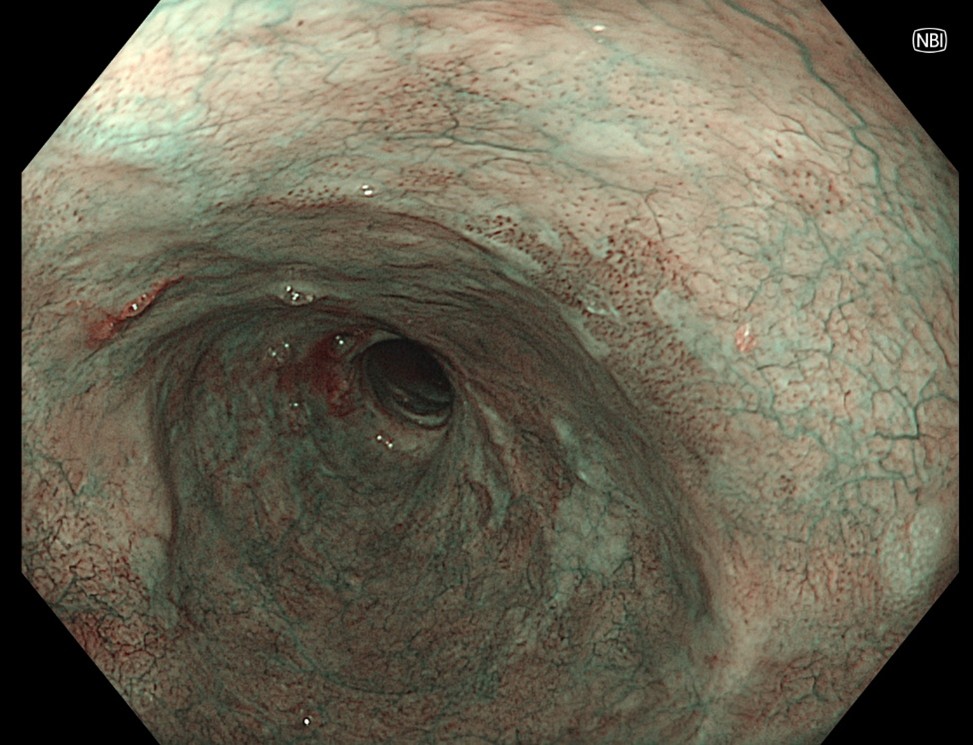
Figure 1: Early squamous cell carcinoma at 2 o clock position.
My Research outside ENDEAVOR
In my research, I’m currently doing a Scandinavian multicenter study on the outcomes of endoscopic resection for esophageal squamous cell carcinoma. Even though the material is not yet published, it is evident from our data that the majority of these tumors are already quite advanced when they are detected. Even though they can be resected successfully, the curability rates are lower than we would have wanted. The same results have been found in other western studies on the same type of patients. In order to cure patients from squamous cell carcinoma, early detection with endoscopy is key. For this reason, raising awareness of the disease and lecturing about advanced endoscopic diagnostic tools is quite important for us as researchers and clinical endoscopists.
Henrik Maltzman